Routes for Ontario’s fibre, designed and permitted.

Atlas Engineering is a Canadian engineering firm. We design aerial and underground outside plant and carry every permit through to approval, sealed by a licensed P.Eng.

One route, start to finish

From the central office to the last pole: conduit and handholes, a bored rail crossing, aerial spans and a creek crossing, the way we design them.

Six services on one strand

Each one carries a route from first design to the sealed package, and the work stays with one team the whole way.

OSP design & permitting

Aerial and underground routes, from first design to the sealed permit package.

  • Aerial OSP design
  • Underground OSP design
  • Make-ready studies
  • As-built drawings

Special permits

Approvals for crossings that need their own owner’s sign-off.

  • MTO corridor permits
  • Rail crossings
  • Bridge attachments
  • Conservation Authority permits

Hydro joint-use permits

Fibre on LDC and Hydro One poles and in their ducts.

  • LDC applications
  • Hydro One approvals
  • Duct bank design

Fibre planning

FTTx planning and high-level design ahead of detailed work.

  • FTTx planning
  • High-level design (HLD)
  • Network expansion

Infrastructure & utility design

Dry and wet services for roads, subdivisions and municipal systems.

  • Dry utility design
  • Wet services design
  • Subdivision layouts

Project & construction management

From approvals through construction, on schedule and on budget.

  • Approvals tracking
  • Site review
  • RFI responses

What does your route cross?

Every crossing has its own owner and its own approval. Tap what your route meets and see the permits to plan for.

3 approvals to plan for

  1. Municipal consentFrom the road authority, for work in the municipal right-of-way.
  2. MTO encroachment permitFor work within a provincial highway corridor.
  3. Rail crossing approvalFrom the railway, for an aerial or bored crossing.
  4. Conservation Authority permitFor work in a regulated area, watercourse or floodplain.
  5. Structure attachment approvalFrom the bridge or culvert owner, usually the municipality or MTO.
  6. Joint-use attachment approvalFrom the LDC or Hydro One, usually after a make-ready study.
  7. P.Eng.-sealed drawingsThe drawing set every one of these approvals is based on.
Add these to my enquiry

A starting point, not a ruling. We confirm the exact permit set at scoping.

How a job runs

Step one

Scoping

We pin down the route, the owners it touches, the constraints and your timeline, so the permit set is known before design starts.
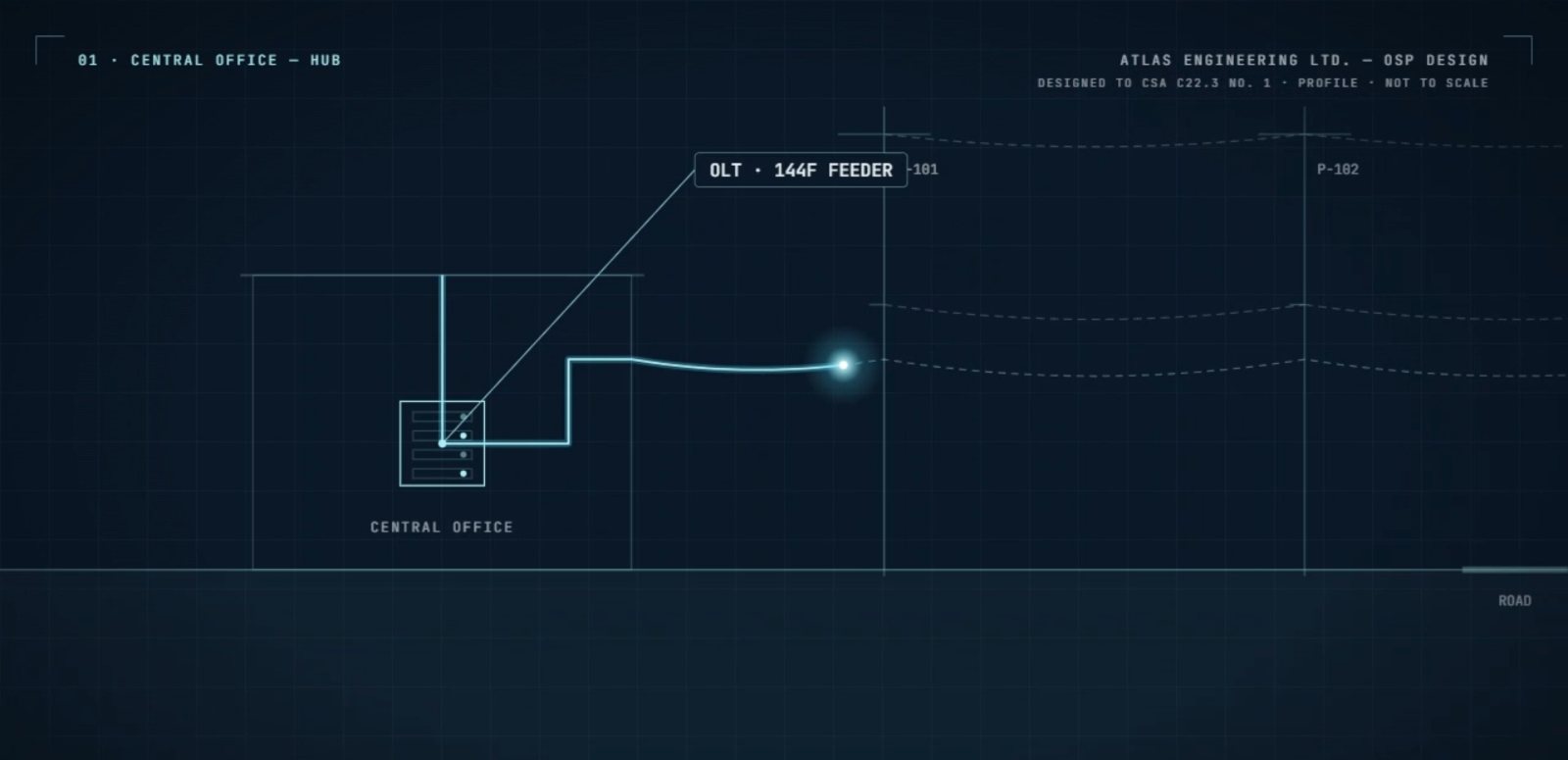
Route drawing: fibre leaving the central office towards the first pole on a 144-fibre feeder

Step two

Design & approvals

We prepare the drawings, calculations and reports, then work with municipalities, utilities and railways until the sealed package is approved.
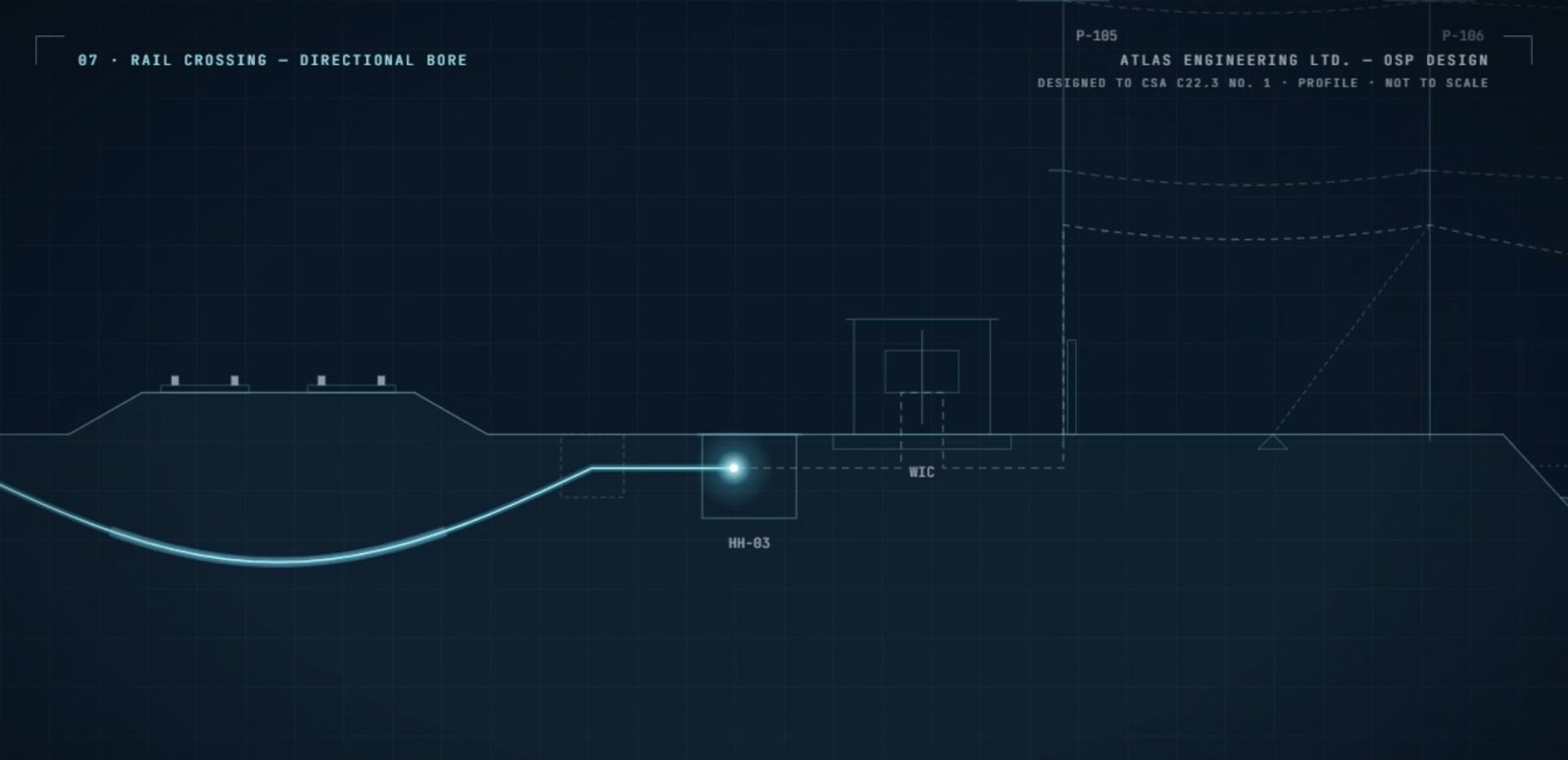
Profile drawing of a directional bore passing beneath a railway embankment into handhole HH-03

Step three

Construction support

We stay on for site review, contractor RFIs and as-built coordination until the route is in service.
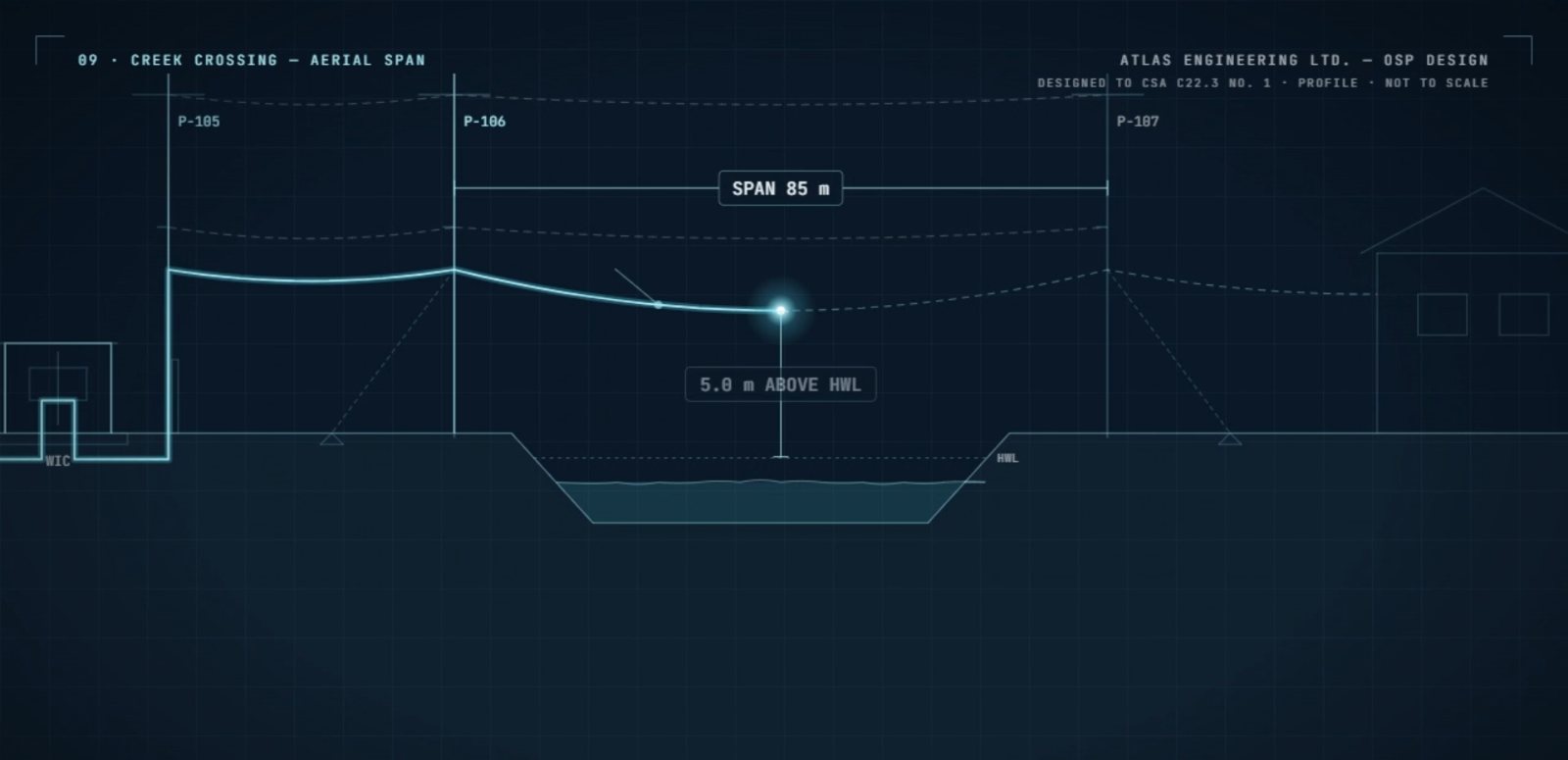
Profile drawing of an 85 metre aerial span crossing a creek, 5 metres above the high water level
Milton

About Atlas

Atlas Engineering Ltd. is an Ontario engineering corporation based in Milton. We design and permit the outside plant that carries Ontario’s fibre, and one team stays with each job from first route to as-built.
Licensing
Professional Engineers Ontario (P.Eng.)
Based in
Milton, Ontario
Work across
All of Ontario
Clients
Municipalities, telecom carriers, LDCs and Hydro One, land developers, and private owners
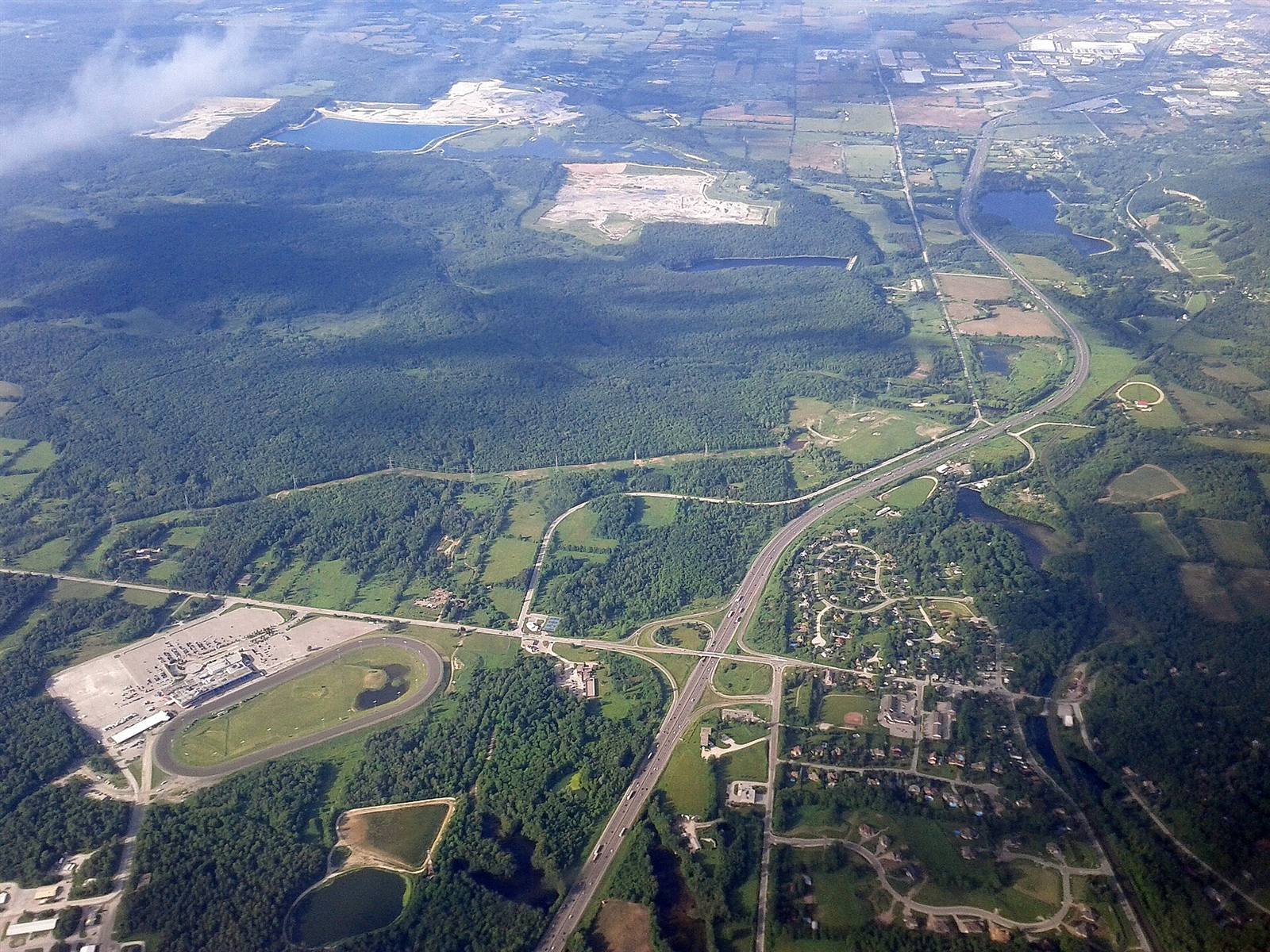
Aerial view of Highway 401 running through the forests and fields of the Greenbelt near Milton
Highway 401 and the Greenbelt near Milton, from the air.

Common questions

Are your drawings sealed?

Yes. Permit drawings are prepared and sealed by a Professional Engineer licensed in Ontario (P.Eng.).

Which permits do you handle?

Municipal consents, MTO corridor permits, aerial and underground rail crossings, bridge attachments, Conservation Authority permits, and joint use with LDCs and Hydro One.

Aerial, underground, or both?

Both, including make-ready studies for aerial routes and duct design for underground ones.

Where do you work?

Across Ontario, from our base in Milton.

What do you need for a quote?

The route or area, the utility owner, your timeline and any design standards you follow. A KMZ or a marked-up map is plenty to start.

How quickly will you reply?

Within one business day.

Start your route here

Tell us where it runs, who owns the poles or the road, and when you need it built. We reply within one business day.

Or email info@atlas-eng.ca